
Our brave hero walked slowly down the roads they once called home, a few questions deeper into their quest. Too many rewrites in their perspective, too many answers they wanted nothing to do with.
The loyal NPC, as always waited aside the abandoned dirt road holding a sack of rations and a potion of health. But he barely recognized the once noble hero.
His gaze softened as he offered the wares. “Welcome back…”
Helloooo!
If you’re here then that means, you need help writing your main character!!! Woohoo yay! Let’s give some people traumatic backstories!
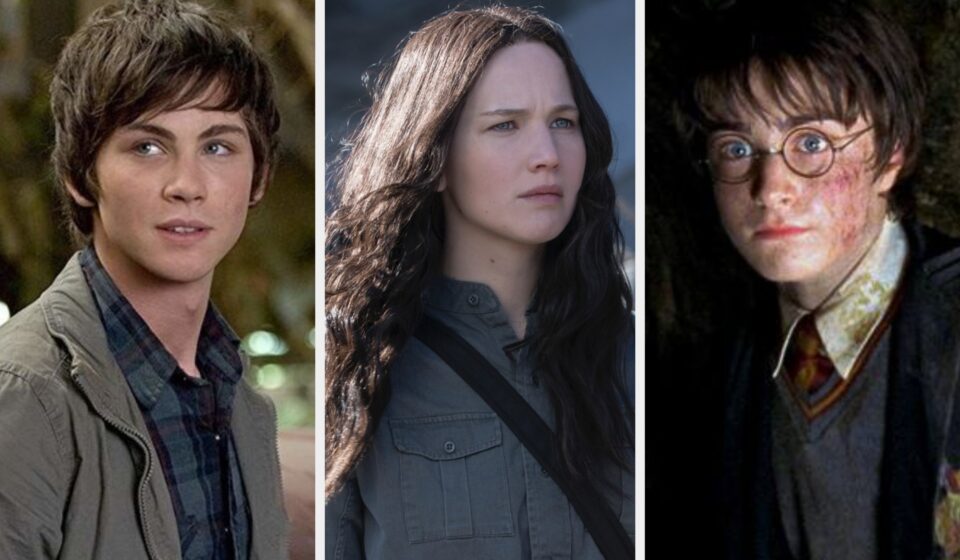
Whether you’re dealing with Harry Potter, Katniss Everdeen, or Peter Johnson, main characters drive your story.
Without a main character, or any character, the epic setting you’ll devise, and the horrible conflict you’ll write, doesn’t really matter.
It’s basically like saying:
There’s a problem in the universe.
Cool bro, we don’t have anyone to fix that.
A little more than pointless, right?
Real quick before I make you read this looooooong article about what makes a good character and why. Here are a few sites that will help you build your character. Feel free to cop out on the actual reading and start building your main character off of these.
Character Flaws List and Explanations
Okayyyyy now going into the why you actually got to build your character and how to do that. Please note that character creation can go so much deeper than this, I’m just giving a run down.
What makes a Main character?
Beyond the chosen one trope (because sure let’s chuck a teenager at a god and see what happens) what actually makes your main character a main character?
As disproved by Brandon Sanderson in ‘Tress of the Emerald Sea,’ your protagonist does not have to be the narrator. In order for your protagonist to be a protagonist they have to progress the story. Get it? Protagonist. Progress. Get it? it’s because of the- yeah, yeah, okay you get it.
But due to this being a guide for beginners, we’re not going to get into the mess of Main character vs protagonist vs narrator vs omnipotent god. For the purposes of this guide, we’ll pretend those are all the same thing and save the headache for later.
A protagonist should have four main attributes. And no it’s not loyal, brave, orphaned and pretty looking.
- Goals
- Flaws
- Growth (character arc)
- Struggle
Let’s break each one down real quick.
Goals
Every person has unique goals. For unique reasons. Believe it or not, everything anyone does is to serve their unique goals. Whether they’re simply trying to survive or trying to climb the social ladder at their school.
This means your fictional characters are their own person. They should have a driving force outside the needs of the plot. If anything the plot should be getting in their way, just a little. Your main character does not exist to be friends with you. You chuck plot at them and see how they respond.
Having your character have their own intentions, their own plans, their own needs will help develop them to your audience.
A great example of a goal oriented character is Katniss Everdeen from the Hunger Games.
POTENTIAL SPOILERS AHEAD
Katniss’s main goal is to protect her younger sister Primrose and keep her family alive. that is established very early on her story and is her driving force. Then the plot gets chucked at her, and hits her square in the face. Her younger sister is chosen to participate in the Hunger Games, which basically is certain death. Katniss volunteers to go instead once again, protecting her sister. Over the progression of the story, Katniss’s goal remains, stay alive to keep Primrose safe. Despite the complications of bread boy and a spectacle she never wanted to be a part of, her goal is to make her sister’s life better and we see that throughout her narrative.
Your main character should have their own motivations and goals. All your characters should, but the MC should have their’s hashed out a little more.
Also, just keep in mind, they don’t have to be good goals either. Revenge. Power. Money. All very reasonable and relatable goals.
Flaws
Um. What’s a flaw? I don’t have any? I’m absolutely perfect.
Is what I would say if I weren’t the main character. Obviously I am the main character.
Ok ok.
Let’s be honest. Perfection is boring. Like yawn, hand to the mouth tears in my eyes boring.
If characters were perfect, they’d react to plot being thrown at them by just dodging carefully.
There are a few things wrong with this:
1. It’s not relatable at all. Like what do you mean I’m about to spend thirty minutes in the head of ‘Miss Ne’er do Wrong’ who’s too humble for me to properly hate? Give me sleep deprived and stupid please.
It is so hard to get emotionally involved in a story if your readers can’t emotionally respond to your MC. Perfection isn’t real. It’s a pedestal, and no matter how hard we try to reach it, we’ll always be off. You don’t want that.
2. It brings the plot to a standstill. No risk of stupidity, no potential to make things worse. You lose a distinctly human side of the story.
There’s less conflict within the story. More a simple process. It’s the difference between making a box of Mac and Cheese and accidentally lighting the kitchen on fire. No one wants to hear about the new strainer you got. But I’ll listen to you tell me about your house being burned down as you hold a black, short haired cat named ‘Snowball.’
3. Perfection leads to stagnation. People grow. People change. And while your character might not be people, morally or otherwise, they should be sympathetic to your readers. Even though there are other way to make your character dynamic and sympathetic, the easiest way is to humanize them.
A moving, mistake making, slightly imperfect character is going to far better than than a bland perfect Johnny do good without a Johnny do good complex.
Growth/Change
Holy. Character. Arcs.
Can we just appreciate the writers and creators that manage to pull off dynamic and realistic character arcs?
Oh my goodness. Steve Harrington, Prince Zuko of the Fire Nation, Loki (both his villain and redemption arc), Walter White. Beautifully developed characters.
Now, there are four main kinds of character arcs that you should look at for your main character.
Moral Ascending.
Moral Descending.
Transformational
Flat.
Your character can have multiple arcs in a story.
Let’s start with my personal favorite to write.
Moral Descending.
A good and noble hero finally giving into the corruption the world has been holding at their throat? A parent who’s watched their child get hurt for the last time? A child who finally figured out that the world wasn’t going to help them past the gutters and slime they were born into?
Yes. Please. And thank you.
A moral descending arc is what happens when a character ethically lowers themselves to a smaller moral standing. In other words, good guy go bad.
There can be a lot of reasons someone adjusts or abandons their moral code. Trauma, revenge, the inability to care anymore, mental instability.
But the most important part of writing a moral descending character is that your readers should understand why.
They don’t need to agree. They don’t need to like it. They don’t need to be okay with it.
But a good writer will make it clear why it happened.
The reason can’t just be ‘I woke up and decided to start kicking puppies.’
Let’s look at one Walter White from Breaking Bad.
A dying, high school teacher who is just trying to leave behind money for his family.
Turned drug kingpin.
Drastic. Insane. And yet it makes perfect sense.
After spending his entire life being just under his full potential, he finds out he is going to die soon. Desperate to secure his family financial situation, he turns to criminal activity.
There’s a certain nobility in that.
But he loses sight of it quickly.
Because after years of being beneath his potential he suddenly has power, control, recognition.
There was always room for him to be a bad guy, to lash out because of the way his life had gone, which is why his development is so believable. He chose the right side of the line until plot got thrown at him.
Things to keep in mind
- What lines won’t they cross now?
- What would make them cross it?
- How would they justify crossing it?
- What’s the next line?
Justifying it is important. Nobody is the villain in their story, we as people tend to think we’re correct. I know crazy, right?
But I’ll lie just this one time, turns into, I got away with it before and it made everything better for everyone, which turns into, no one can no I lied, how do I make sure they stay quiet?
Fun. Ugh. I love this character arc.
Burn the world that burned me.
Now moving on to the opposite.
Moral Ascending.
Ok.
wow.
Let’s just get straight into it with this boy. Sifu Hotman, Zuzu, Iroh’s Favorite Nephew and arguably one of the best MCs across all of fiction.
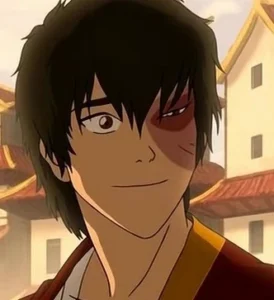
This little cinnamon roll of a guy. Prince Zuko from Avatar the last Airbender.
He starts out as an angry teenager, banished, dishonored, cruel in his own right.
He ends breaking his family’s cycle of war and bloodshed, makes his own path to honor, and earns the friendship of four of the most influential people in the world.
Oh. And brother becomes firelord.
A moral ascending arc is what happens when a character grows into a better version of themselves. Their morals change, strengthen. They as people heal, grow and understand, and just do a little better.
Just like everyone, Zuko always had the potential to do good. But he chose the side that he was raised on.
Grandfather did genocide so I must to. Which… sure dude. Whatever makes sense I guess.
He thought that obeying his father, finding the Avatar, winning the war, would give him what he wanted. Honor.
He made mistakes.
A. Lot. Of. Mistakes.
But with the support of his uncle, slowly he found a better way.
And then he immediately screwed it all up. But he got everything he ever wanted. The company of his sadistic sister, the love of his rich girl girlfriend, a right seat next to his father, and a plan to commit mass genocide. Making ol’ grandpappy proud.
The important thing about moral ascension is that it has to be a choice your character is ready to make. When they step away from others influence and chose for themselves.
Zuko gets everything he wants, and he realizes, after the people he’s met, the things he’s seen, the mistakes he’s made, it can’t make him happy. There isn’t honor in the plans his family has made. There isn’t honor in killing the defenseless. There isn’t honor in the way his people have lived for the past hundred years.
So, he steps back. He looks at everything he thought he wanted. Everything he never thought he deserved. And he decides to leave.
He decides that doing the right thing is more important than getting what he wanted.
Growth is earned.
It is a struggle.
It is a choice.
It is not immediate.
And it is the kind of thing that gives people hope.
Things to keep in mind
- What’s holding them back? Beyond their flaws, why are they not improving?
- What starts the view point shift?
- What finalizes the view point shift?
- What does doing the right thing cost them?
- Why doesn’t that matter anymore?
Becoming a better person is the fundamental purpose of existence, (according to like half the world or whatever) but it’s also hard. Showing someone inherently bad become good is one of the biggest hopes of humanity. Change is possible. Even in the worst of us.
Transformational
Zero to Hero.
Wonder what just popped into your head there?
Perhaps the gospel truth? Five goddesses singing over some greek tragedy?
Geez louise.
Let’s talk Hercules.
(Heh. That rhymed.)
Disney, Disney, Disney. Doubt you would sue me (an entirely innocent, not even old enough to vote, hasn’t done a single thing wrong ever, small time writer) for defamation. But I hear mice are petty so I’m going to keep the thoughts to myself and talk about something they did do right.
Transformational arcs mean that objectively, same person, just in a different form. Caterpillar to butterfly. Something they believed about themselves, the world, the people around them, shifts. They keep their same moral standings, but for different reasons maybe.
Herky boy believed that what made a hero was strength. Which makes sense. It’s easier to save people when you can lift giant rocks and chuck them at giant monsters.
And so when he has to become a true hero, so he can become a god, (which sure dude, you do that) he seeks out fame, fortune, damsels. He gets rich. He fights the monsters.
Yet he still isn’t deemed a real hero.
Recognition isn’t enough.
Fame isn’t enough.
The girls going wild with ooohs and ahhhs isn’t enough.
But when Meg is in danger, for the first time, he has to sacrifice something.
Everything.
Leaving his home wasn’t a sacrifice, it was a risk, one that paid off.
Fighting monsters isn’t a sacrifice when they can’t touch you.
Giving your life for someone you love?
That is sacrifice.
True unbridled sacrifice because he can’t get anything afterwards. No royalties or appearance fees no cash to burn.
Then and only then does he become a hero.
Because he learns that being a hero isn’t about how strong you are, but how selfless you are.
By the end of the story Hercules isn’t the same person who left home looking for applause and acceptance. He’s someone willing to give up everything for the life of another.
Fundamentally, exact same morals. He still wants to help people. He still wants to make the world better.
Different reasons.
Transformational arcs should be about a character not recognizing themselves.
Yeah, skinny, picked on, Hercules wouldn’t recognize his massively glowed up version. Not the muscles, not the girl, not the weird relationship he has with a horse. But he also wouldn’t be able to connect the fact that he gave up godhood and all the love and power he could’ve gotten from it.
Things to keep in mind
- Who are they at the start?
- Who are they at the end?
- What belief has to die for that change to happen?
- What events force them to confront that belief?
- What does the new version of them understand that the old version couldn’t?
It’s not a change in character. It’s a change in outlook.
Flat
Now let’s get one- two- nope three things straight.
Flat does not mean static.
Flat characters do not have to be good people
Flat characters are not an avoid at all costs. You just have to confident enough to do it.
Flat arcs basically means that as we (the writers) are chucking plot at these poor characters, they don’t change. There’s no sudden moral realizations, there’s no transformation, there’s no anything. They bulldoze through and leave places behind them changed.
They learn, they grow, but at the core, they are the same just adjusting to the circumstance.
Let’s take our wonderful Capsicple, the man with a plan himself, the kid from Brooklyn with newspaper stuffed in his shoes.
Steve Rogers.
Objectively, phenomenal character. Personally my favorite Avenger. No offense to Tony, but ‘Merica!
Now I know a lot of you are like, but CJ, ‘Steve Rogers literally had a super serem that made him Chris Evens brawny.’
Ya.
But we aren’t that deep into this guide yet. We’ll talk about physical transformation like a lot later.
For now we’re talking about the fact that Steve Rogers, skinny and pale or buff and built, was always Captain America.
Throughout his story he had so many chances to change his moral systems, to adapt because it would be easier for him.
Following orders he didn’t agree with.
Leaving people behind.
Accepting corruption.
Looking the other way.
He doesn’t. At the end of the day he’s still the kid that gets back up every time he gets knocked down.
At his core, it’s always do the right thing. And that’s what he does. Not because he’s not tempted, but because it’s who he is.
He gets mislead, and he makes mistakes, but he is always sticking to who he is at the core.
The world around him is the thing that changes, changed by him.
And you are still thinking that it sounds like a static character. Which is bad for a main character. Ahhh.
What’s different?
To my understanding?
Static characters don’t learn. they don’t grow. they don’t adapt.
A flat character is always learning, always adapting to the story so they can maintain their core beliefs.
Things to keep in mind
- What does your character believe?
- What challenges that?
- Why does everyone around the character reject that?
- Who changes because of their influence?
- What pressure is applied to make them abandon their beliefs?
- THEY DON’T HAVE TO BE GOOD PEOPLE (just for the right reasons please)
A flat arc isn’t about changing a character.
It’s about testing them.
Can they hold onto who they are when everything around them tells them not to?
Can they keep believing when nobody else does?
Can they stay standing when the world wants them on their knees?
And the answer is going to be a long pause and then yes.
Struggle
Plot.
Throw it.
You as a writer can do one of two things. Make your story unbearable boring. Or make your main character struggle a little.
It all comes back to the point of perfection is boring.
I don’t want to hear about your perfect life. But yeah, I’ll listen to you make relatable, funny, disastrous mistakes.
They should be fighting the plot to get what they want, and sometimes they should lose.
Sometimes they need to lose.
The human experience is a messy complicated thing. It’s painful.
Adding dragons and magic doesn’t change that.
Go forth, write someone real. Whether dragon, human, elf, bread or tree.
Come back when you’re ready for the next step. Good luck Adventurer!